

A well-chosen wrap earns its place any season. Pure cashmere wraps are the layer reached for on a cool flight, over a linen dress at dinner, or during relaxed time at home. Light in the hand yet generously warm, they bring a sense of ease to the wardrobe without the bulk of a coat or the formality of a tailored jacket. There is a weight and style to suit any temperature or style.
Cashmere has long been valued for its softness, but its real beauty lies in the way it works through daily life no matter the season. A fine natural fibre can hold warmth close to the body while allowing air to circulate, making a wrap surprisingly adaptable across changing seasons. For New Zealand and Australian wardrobes, where a clear morning may become a warm afternoon and evenings often call for an extra layer, that versatility really matters.
Why pure cashmere wraps feel different
Cashmere comes from the soft undercoat of cashmere goats, gathered during the natural shedding season and spun into yarn. It is a fibre that feels considered: warm without looking heavy, refined and relaxed.
A wrap made from pure cashmere has a particularly soft handle because it is not blended with synthetic fibres or sheeps wool. This doesn't mean every pure cashmere wrap will feel identical. Fibre length, yarn twist, knitting or weaving technique, finishing, and the care taken in production all affect the final piece. A beautifully made wrap should feel soft from the first wear, but it should also have enough substance and recovery to have a practical sensibility over time.
Choosing a pure cashmere wrap that will last
The most useful wrap is not always the thickest as even a lightweight wrap will offer warmth like no other fibre. Consider where and how it will live with you. A generous, lightweight weave is ideal for travel, restaurants with overzealous air conditioning, and summer evenings by the water. A denser knit or more substantial woven finish may suit winter layering and time spent in cooler southern climates.
Look beyond the word cashmere
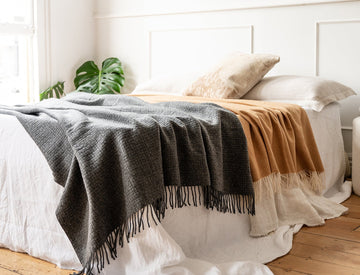
The fibre composition is the first place to start. If you are seeking the softness, warmth and breathability associated with the material, look for a label that states 100% cashmere. Blends can have their place, especially where added structure or durability is desired, but they perform differently and should be described clearly. Blends can be useful and practical when considering larger pieces like our Loom Blankets and Throws.
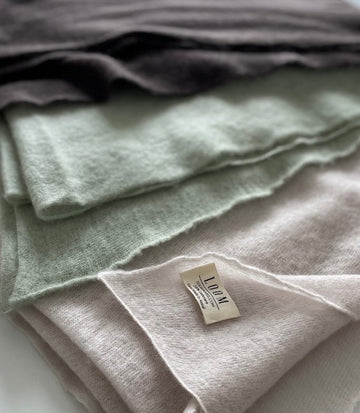
Colour is another quiet practical decision. Natural neutrals such as oat, stone, charcoal and soft grey become regular companions to an existing wardrobe. They sit beautifully with denim, black tailoring, white cotton and warm linen. Richer colours can be equally timeless when they are grounded in nature: deep forest, faded rose, ink blue or burnished earth. Choose the shade you will want to reach for often, not simply the one that stands out in the moment.
Consider provenance and making
Luxury is not only a feeling against the skin. It also concerns the care behind a piece: responsible fibre sourcing, respectful working relationships, small-batch production and thoughtful finishing. For those building a wardrobe with intention, transparent standards matter as much as the final texture.
Ask whether a brand can speak clearly about its materials and makers. Independent verification through recognised ethical, environmental and textile safety standards can offer useful reassurance, though certifications are only one part of a wider commitment. A piece made with care, designed to be worn repeatedly and kept in circulation for years, is a more meaningful alternative to seasonal excess.
How to wear a cashmere wrap through the year
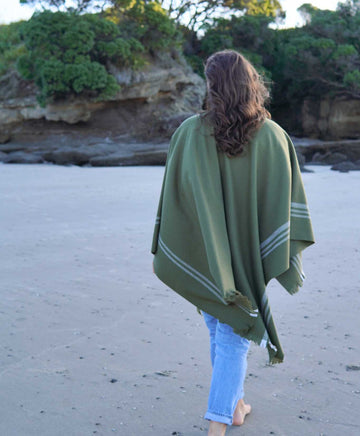
A wrap is less prescriptive than a cardigan and more elegant than a blanket scarf. Its appeal is in its adaptability. There is no single correct way to wear one, but a few simple approaches make the most of its drape.
In autumn and winter, fold it lengthways and let it fall over a fine merino knit, shirt or coat. A loose loop around the neck creates warmth without compressing the fibre. For evening, place it over both shoulders with the ends left long and relaxed. The silhouette adds softness to silk, tailoring and simple black dresses without competing with them.
During spring, use it as the layer that stays in your bag until the light changes. Draped over a sleeveless knit or linen shirt, cashmere balances the crispness of warmer-weather fabrics. On a coastal weekend or a late lunch outdoors, it offers enough protection from a breeze while still feeling light and unfussy.
Summer may seem an unlikely season for cashmere, yet a finely made wrap has a place then too. Air-conditioned dining rooms, long-haul flights, early ferry crossings and cool mountain evenings all call for a layer that is light and feels gentle on sunkissed skin.
For travel, its value is especially clear. Wear it as a scarf in transit, use it as a soft layer over the knees on a flight, then place it around the shoulders on arrival. This is naturally liveable luxury: a beautiful object that does more than one job and feels right wherever the day leads.
Caring for pure cashmere wraps
Cashmere lasts best when it is worn, rested and cleaned with restraint. It does not need washing after every outing. Often, a day of airing on a clean, dry surface is enough to refresh it. Avoid hanging a wrap on a narrow hanger, which can pull the fibres out of shape. Fold it instead, ideally in a drawer or breathable storage bag away from direct sunlight.
All our wraps come in a natural muslin carry bag.
When washing is needed, follow the care label first. Hand washing in cool water with a small amount of cashmere or wool wash is generally the gentlest option. Move the wrap through the water softly rather than rubbing or wringing it. Rinse carefully, press out excess water in a clean towel, and reshape it flat to dry away from heat.
Pilling can occur even with excellent cashmere, particularly where the wrap meets a handbag strap, coat sleeve or jewellery. It is a natural result of fine fibres working loose through friction, not necessarily a sign of poor quality. Remove pills gently with a cashmere comb or fabric shaver designed for delicate knits, using a light touch. Over time, a well-made piece often settles and becomes more refined with careful wear.
Moths are the other consideration. Before storing cashmere between seasons, make sure it is clean, dry and fully aired. Natural deterrents can be pleasant, but they are not a substitute for regular checks and secure storage. A little attention at the end of winter protects the piece for the next cool evening.
A considered layer for everyday rituals
The lasting appeal of a cashmere wrap is not reserved for special occasions. It is there in the ordinary moments: reading near an open window, stepping outside after sunset, meeting friends for dinner, or packing lightly for a weekend away. Its softness creates comfort, while its simple form leaves room for the rest of your wardrobe to speak.
At Loomwares, this balance of material, versatility and responsible craftsmanship sits at the heart of a wrap for all seasons. Choose one with a colour and weight that suit your life, care for it with patience, and let it become part of the rituals you return to year after year.


