

A cashmere wrap is often bought for the moment it creates: a little warmth over a linen dress at dinner, a soft layer for a long-haul flight, or something beautiful to reach for when the evening cools. Yet the most satisfying wrap is not only exquisitely soft. An ethically sourced cashmere wrap carries a quieter kind of comfort - one grounded in considered fibre, respectful production and a design you will keep wearing for years.
Cashmere has always invited discernment. Its delicate warmth, lightness and gentle lustre are remarkable, but they do not tell the whole story. Knowing where the fibre comes from, how it has been gathered and processed, and who has made the finished piece turns a lovely purchase into a more meaningful one.
What makes cashmere ethical?
There is no single label that makes a cashmere wrap ethical in every sense. Responsible sourcing is a chain of decisions, beginning with goats and grazing land, continuing through spinning, dyeing and weaving or knitting, and ending with the conditions in which people work. The best makers can speak clearly about that chain rather than relying on broad, feel-good claims.
Cashmere is the fine undercoat naturally grown by cashmere goats, most commonly raised across the highlands and grasslands of Mongolia, China and Central Asia. Each spring, goats shed this downy fibre, which may be combed or collected before it is sorted from the coarser outer hair. The process sounds simple, but quality and care matter at every point.
Animal welfare and land stewardship
A responsible cashmere supply begins with considered goat husbandry. Goats need protection from severe climates, adequate feed and water, and handling that avoids unnecessary stress or harm. Responsible practices also recognise that herd size has environmental consequences. When grazing exceeds what fragile grasslands can support, soil can become depleted and landscapes vulnerable to erosion.
This is where traceability becomes valuable. A retailer or maker should be able to explain its relationship with suppliers and the standards expected within its supply chain. Full farm-level traceability is not equally accessible across every cashmere region, particularly for smaller producers, but a lack of perfection should not become a reason for silence. Look for honest detail, ongoing supplier relationships and evidence of improvement.
Fair, safe work through the supply chain
The romance of a finished wrap can obscure the skilled hands behind it. Cashmere must be de-haired, spun, dyed, knitted or woven, finished and carefully checked. Ethical production means those processes occur in safe workplaces where workers are treated fairly and paid appropriately.
Independent social compliance frameworks, such as SEDEX membership and Fair Trade-aligned practices, can offer useful reassurance, especially when paired with transparent communication from the brand. They are not a substitute for a maker taking responsibility, but they can indicate that labour conditions, health and safety, and workplace practices are being monitored rather than ignored.
Thoughtful processing and safer finishes
The environmental story does not stop once fibre leaves the farm. Scouring, dyeing and finishing can require water, energy and chemicals. Certifications such as OEKO-TEX can help identify textiles tested for harmful substances, while standards including GOTS are relevant where organic fibres are part of a wider textile programme. It is worth reading claims closely: a certification may apply to a particular material, mill or process rather than every element of a finished garment.
That level of specificity is a good sign. Responsible brands do not need to imply that a natural fibre is impact-free. Cashmere is precious precisely because it asks for care - from the landscape that produces it to the person who wears it.
How to recognise an ethically sourced cashmere wrap
Start with the information offered before you purchase. A beautifully photographed product page is lovely, but it should also answer practical questions. Is the fibre composition stated plainly? Does the brand identify where its pieces are made or describe its artisan and mill relationships? Are ethical standards named with enough context to understand what they cover?
Be wary of vague language that presents cashmere as inherently sustainable simply because it is natural. Natural fibres can be an excellent alternative to disposable synthetics, but their impact depends on sourcing, processing and lifespan. The more useful question is whether the wrap has been made to be worn often, cared for properly and cherished over time.
Fibre quality offers another clue. Fine cashmere does not need to be excessively thick or heavily treated to feel luxurious. It should feel soft without a slippery, overly synthetic finish, and it should have a light, resilient character rather than a limp one. Longer, carefully selected fibres generally pill less than shorter fibres, although some light pilling is normal with any natural cashmere, particularly during its first wears.
Construction matters too. Look at the edges, the consistency of the knit or weave, and the way the wrap falls. A well-made piece should drape with ease while retaining enough structure to sit beautifully over the shoulders. For a wrap intended to move between travel, work, evenings out and quiet weekends, versatility is not an afterthought. It is part of longevity.
Choose a wrap you will genuinely wear
The most responsible item is rarely the one saved for a single occasion. It is the piece that becomes part of your rhythm: folded in a tote for an over-air-conditioned restaurant, worn as a soft scarf beneath a coat, or placed across the end of the bed when guests arrive.
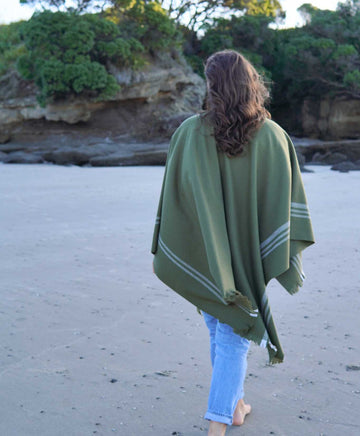
Consider proportion before colour. A generously sized wrap offers more styling possibilities - draped over the shoulders, belted loosely at the waist, gathered at the neck or used as a travel layer. A narrower scarf-like shape can be ideal if you prefer less volume or want something that slips easily beneath outerwear. Neither is better; it depends on how you dress and the climate where you live.
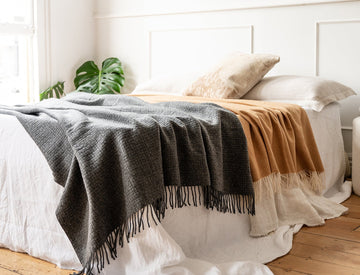
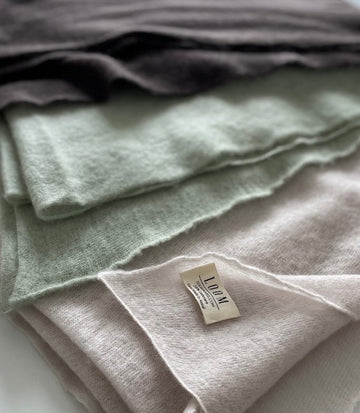
Colour deserves the same patience. Soft stone, oat, charcoal and deep navy tend to work effortlessly across seasons and can make a wrap feel almost indispensable. But colours of nature are not limited to neutrals. Moss, sea blue, rust or a muted rose can bring warmth to a restrained wardrobe without becoming a passing statement. Choose a shade that belongs with what you already own, not only with the image that first caught your eye.
At Loomwares, the intention behind natural-fibre pieces is simple: relaxed luxury should be lived with. A cashmere wrap can be refined enough for an evening table and uncomplicated enough for the passenger seat on a coastal drive. That breadth of use is where its value begins to reveal itself.
Care is part of the ethics
Buying better is only one part of the equation. Caring well for cashmere extends its life, reduces replacement and preserves the soft, airy character that made you choose it.
Cashmere does not need washing after every wear. Allow it to air between uses, preferably laid flat away from direct sun and heat. When washing is needed, use cool water and a gentle wool wash, handle the piece lightly and avoid twisting or wringing. Press out excess water in a clean towel, then reshape and dry flat. Heat and hanging while wet can distort the fibres.
Store your wrap clean and folded, rather than suspended on a hanger. During warmer months, a breathable storage bag and a natural moth deterrent can help protect it. If small pills appear, remove them gently with a cashmere comb or fabric shaver. This is maintenance, not a fault - the reward is a wrap that becomes softer and more personal with wear.
A considered layer, season after season
An ethically sourced cashmere wrap is not defined by a single promise printed on a tag. It is recognised in the care taken with animals, landscapes, makers, materials and finish, then completed by your willingness to wear it well and keep it close. Choose the piece that feels right in your hands, asks sensible questions of its own making, and will quietly earn its place in your everyday life.


